
Results of Regulatory Surveys
Plasticdiet Indonesia, together with our organization partners, conducted monitoring and evaluation of Single Use Plastic (SUP) banning regulation in Jakarta, Bali, Bogor City, and Kediri City. The monitoring results generated data on the volume of single-use plastics still being distributed, factors influencing the implementation of SUP banning, as well as the challenges in monitoring the […]
Policy Brief MERIT Project
Plasticdiet Indonesia, YPBB Bandung, and PPLH Bali develop a credible and science-based method for monitoring methane performance at landfill (TPA) through the MERIT (Methane Emissions Reduction Initiatives for Transparency) Project. This project aims to generate scientific evidence for methane emission prevention and to facilitate informed policy decision-making in waste management in Indonesia. Download MERIT’s Policy […]
Study on Reuse & Refill Infrastructure and Operational Systems
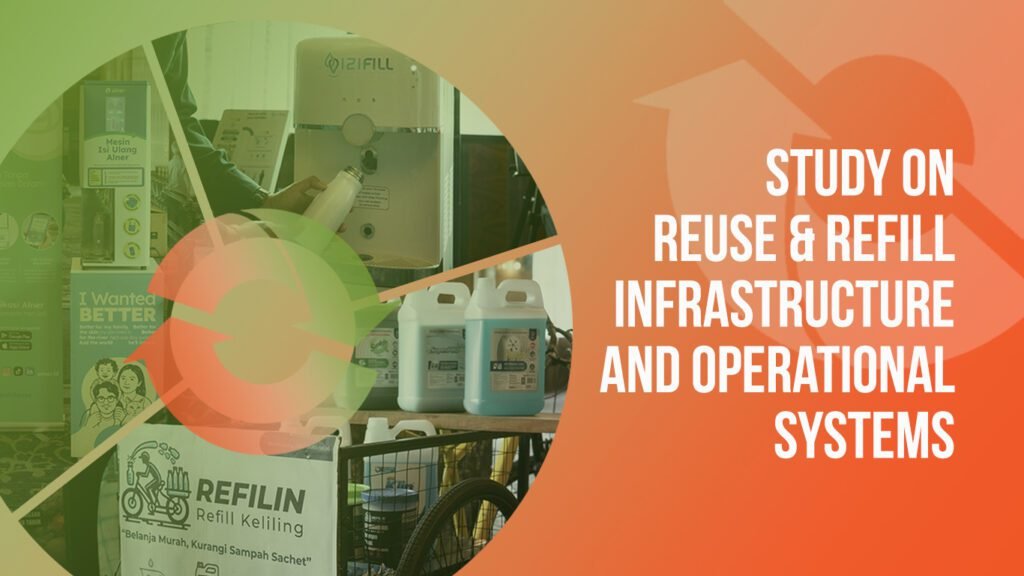
This study was prepared under the direction of the Coordinating Ministry for Infrastructure and the Ministry of Environment by Plasticdiet Indonesia, in collaboration with the Indonesia Reuse Association (AGUNI) and with the support of GIZ Green Infrastructure Development. It provides a comprehensive analysis of the existing conditions, challenges, and opportunities for developing reuse and refill […]
Policy Brief MERIT Project

This document sums up the result of MERIT(Methane Emissions Reduction Initiative for Transparency) Project, aimed at developing (1) a more credible and applicable methane emission measurement method for landfills in the Indonesian context, (2) more accurate, science-based baseline emissions data for landfill methane, and (3) recommendations for preventing methane emissions at landfills and calculating methane emission reductions […]
Preliminary Study: Establishing Reuse Solutions and Roadmap Design for Waste Reduction through Reuse by Producers in Indonesia

This document presents the preliminary study that aim to develop strategies and roadmap in order to reduce plastic waste through reuse by manufacturers in Indonesia. This is intended as a transition part into circular economy where the products and packaging are not only used once, but also reusable by several models and reuse system. Download […]
Preliminary Study: Establishing Reuse Solutions and Roadmap Design for Waste Reduction through Reuse by Producers in Indonesia

This document presents the preliminary study that aim to develop strategies and roadmap in order to reduce plastic waste through reuse by manufacturers in Indonesia. This is intended as a transition part into circular economy where the products and packaging are not only used once, but also reusable by several models and reuse system. Download […]
Reuse Movement: Solution to Replace Single-Use Plastic

Pemerintah Indonesia melalui Kementerian Lingkungan Hidup dan Kehutanan mengeluarkan Peraturan Menteri No. P75/2019 tentang Peta Jalan Pengurangan Sampah oleh Produsen, yang mana menargetkan per 1 Januari 2030, penggunaan plastik sekali pakai akan dilarang, dan produsen didorong untuk berpartisipasi aktif dalam mengurangi limbah kemasan produknya. Peraturan ini mencakup berbagai bentuk pengurangan penggunaan plastik sekali pakai yang […]
Guide to Preparing Single-Use Plastic Restriction Regulations

Single-use plastic is still a problem in Indonesia. Not only does it harm the environment, but single-use plastic has also been proven to affect human health, whether inhaled directly through the air or contaminated by the food and drinks consumed. Indonesia, which has been recorded as the second largest contributor of marine plastic waste in […]
Reuse Special Interest Group Recommendations to a Zero Draft Global Plastic Treaty
Creating a Reusable System
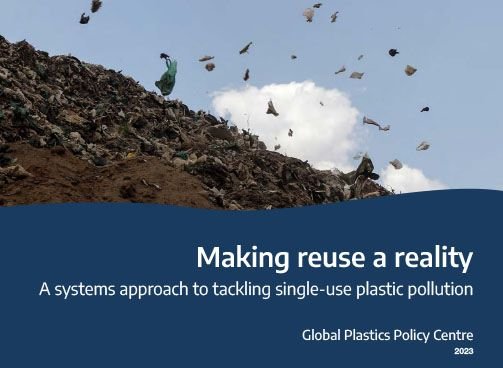
This report will explain the four important stages needed to realize a reuse system, starting from the first step to the stage of creating enabling conditions for reuse systems to become the new norm. These stages are based on some of the evidence presented in the earlier chapters of this report. Through these stages, reuse […]
